Picture this: you’re in the middle of preparing a delicious meal, and you reach for a can of tomatoes, beans, or soup. Suddenly, you’re wrestling with a stubborn manual can opener, your hand cramping, and the frustration building. If this sounds all too familiar, it’s time to upgrade to an automatic can opener. These clever kitchen gadgets transform a tedious chore into a swift, hands-free operation, making them an indispensable tool for anyone who loves to cook, has limited hand strength, or simply appreciates efficiency in the kitchen. Finding the Best Automatic Can Opener can truly revolutionize your cooking experience, turning a moment of potential struggle into seamless meal prep.
A Brief History of Can Openers: From Manual Labor to Modern Marvels
The journey of the can opener is surprisingly intricate, mirroring the evolution of food preservation itself. Canned food first appeared in the early 19th century, but believe it or not, the initial cans were so thick they often required a hammer and chisel to open! It took decades for can designs to become standardized and for dedicated opening tools to emerge. Early manual can openers, while a vast improvement, still demanded significant physical effort and often left dangerously sharp edges.
Fast forward to the 20th century, and the advent of electricity brought about a culinary revolution. The first electric can openers appeared in the 1930s, promising an end to strained wrists and jagged lids. These early models paved the way for the sleek, efficient, and user-friendly automatic can openers we rely on today, constantly innovating to offer smoother cuts, safer designs, and greater convenience. What started as a brute-force task has truly evolved into a sophisticated, one-touch operation.
Understanding the Types: Upright vs. Handheld Automatic Can Openers
When you’re looking for the best automatic can opener, you’ll generally encounter two main styles: upright (or stand-up) and handheld. Both offer distinct advantages, so understanding your needs and kitchen setup is key to choosing your perfect match.
Upright Electric Can Openers
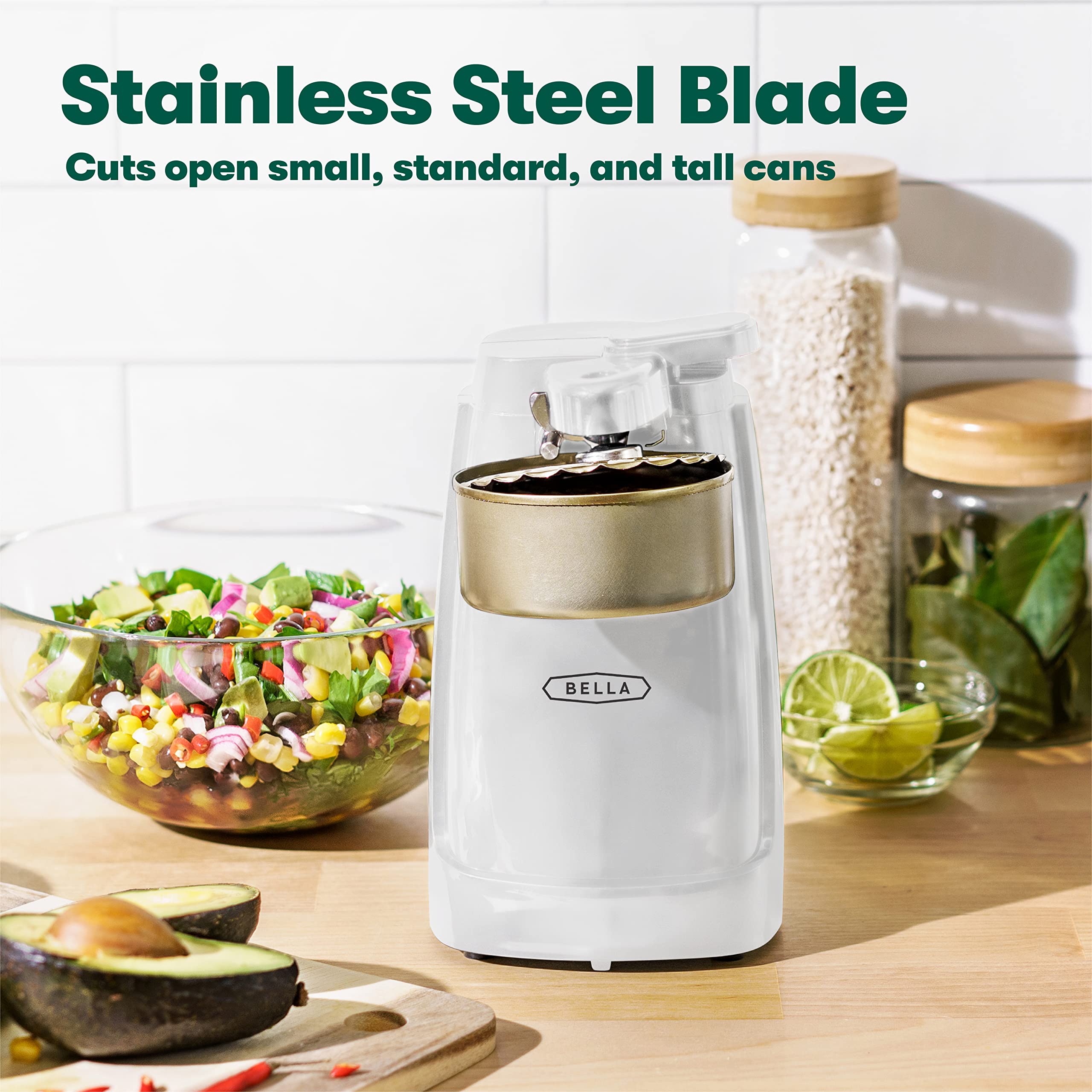
These are the traditional countertop models, often recognized for their robust design and hands-free operation. You simply position the can under the cutting mechanism, press a lever or button, and the machine does the rest.
- Pros: Upright models often boast greater stability due to their heavier bases, making them excellent for opening larger or heavier cans without fear of tipping. Many offer a completely hands-free experience once the can is engaged, which is a huge relief for those with arthritis, carpal tunnel, or limited grip strength. They are generally more powerful and consistent.
- Cons: The most significant drawback is their footprint; they take up valuable counter space. While some designs are sleek, they are not typically stored in a drawer.
Handheld Automatic Can Openers
These compact, battery-operated units represent a more modern, portable approach to can opening. They literally “walk” around the can, making the cut as they go.
- Pros: Portability and compact storage are the biggest wins here. They can easily be tucked away in a drawer, making them ideal for smaller kitchens, RVs, or even for travel. They are often battery-operated, offering cordless convenience. Many models feature a “one-touch” operation where you simply place it on the can, press a button, and let it go to work.
- Cons: Handheld models require batteries (often AA, not included), which need to be replaced periodically. While capable, some can struggle with very large or unusually shaped cans, and they might be slower than their upright counterparts.
Side-Cut vs. Top-Cut: Prioritizing Safety and Cleanliness
One of the most crucial distinctions in can opener technology, especially for automatic models, is how they cut the can. This impacts both safety and hygiene.
- Top-Cut Can Openers: These traditional openers cut into the top surface of the can lid, just inside the rim. While effective, they often leave behind sharp, jagged edges on both the lid and the can itself, posing a significant safety risk. Additionally, the blade typically makes contact with the food inside the can, meaning the cutting mechanism requires thorough cleaning after each use to maintain hygiene.
- Side-Cut Can Openers: This innovative design works by cutting horizontally along the side seam of the can, below the rim. The result? A remarkably smooth, re-sealable edge on both the lid and the can. This virtually eliminates the risk of cuts from sharp edges. An added benefit is that the cutting mechanism usually doesn’t touch the food, reducing the need for extensive cleaning and making them more hygienic overall. For a truly safe and clean experience, a side-cut automatic can opener is almost always the superior choice.
Key Features to Look for in the Best Automatic Can Opener
When you’re on the hunt for the best automatic can opener, keeping an eye out for specific features can make all the difference in your daily kitchen routine.
- Ease of Use: This is paramount. Look for models with simple, intuitive controls, often just a single button or an easy-to-press lever. The opener should securely grip the can quickly and release it smoothly once opened.
- Safety Features: A smooth-edge (side-cut) mechanism is a non-negotiable for safety, preventing cuts. Many top automatic can openers also include an auto-shutoff feature once the can is fully opened, and a magnet that conveniently lifts the lid away, preventing it from falling into your food.
- Versatility: Can openers should be able to tackle a variety of can sizes, from small tuna cans to large 28-ounce tomato cans, and even those slightly dented ones that manual openers refuse to touch.
- Power Source: Decide if a corded upright model (consistent power, no batteries) or a battery-operated/rechargeable handheld unit (portability) best fits your lifestyle.
- Durability and Design: A sturdy build means longevity. Look for quality materials and a design that complements your kitchen aesthetic. Removable cutting levers are a plus for easy cleaning.
- Noise Level: While all electric appliances make some noise, some can openers are noticeably quieter than others, which can be a small but welcome consideration.
Top Contenders: Our Picks for the Best Automatic Can Openers
Finding the best automatic can opener often comes down to personal preference, but some models consistently rise to the top for their performance, safety, and user-friendly design.
Hamilton Beach Smooth Touch Electric Automatic Can Opener
This model frequently earns top marks as an overall favorite. It excels with its innovative side-cutting system, which means no sharp edges, a huge plus for safety. Users appreciate its easy-to-use push-down lever and its ability to open various can sizes. It’s a stand-up, corded model known for reliable performance and often includes extra features like a built-in knife sharpener. While it doesn’t always have an automatic shut-off, its consistent, smooth cuts make it a kitchen staple.
Kitchen Mama Auto 2.0 Electric Can Opener
For those prioritizing portability and a compact design, the Kitchen Mama Auto 2.0 is a fantastic handheld, battery-operated choice. It effortlessly glides around cans of all sizes, leaving smooth edges thanks to its side-cutting mechanism. Its one-button operation makes it incredibly user-friendly, and a magnet holds the lid for easy, mess-free removal. It’s perfect for smaller kitchens, camping, or anyone who prefers to store their can opener in a drawer rather than on the counter.
Cuisinart Deluxe Electric Can Opener
If you’re looking for a blend of style, power, and functionality, the Cuisinart Deluxe is a strong contender. Its sleek stainless steel design often earns praise for looking great on the countertop. This upright model features a sturdy base for stability, a powerful motor, and a precise cutting action. Many Cuisinart models come with a robust warranty and an auto shut-off, making them a reliable and visually appealing choice for the modern kitchen.
Handy Can Opener Automatic One Touch Electric Can Opener
For a budget-friendly option that still delivers on performance, the Handy Can Opener is a notable pick. This compact, battery-operated, handheld model attaches securely to the can and initiates a clean side-cut with just a single button press. It includes an auto-stop function for added safety and convenience. Despite its affordable price point, it provides dependable performance and an ergonomic design that fits comfortably in your hand.
Looking to explore more options? Check out a wide range of can openers to find the perfect fit for your kitchen needs!
|
Our Picks for the Best Can Opener in 2026
As an Amazon Associate I earn from qualifying purchases.
|
||
| Num | Product | Action |
|---|---|---|
| 1 | GORILLA GRIP Heavy Duty Stainless Steel Smooth Edge Manual Can Opener, Soft Comfortable Handle, Large Handheld Turn Knob, Built-In Bottle Openers, US Designed, Holiday Prep Kitchen Essential, Black |

|
| 2 | Premium Multifunctional Magnetic Manual Can Opener and Bottle Opener, Heavy Duty Stainless Steel Sharp Cutting Blade and Oversized Easy Turn Knob, Soft-Touch Handle, Kitchen Use, Orange |
|
| 3 | KitchenAid Classic Multifunction Can Opener and Bottle Opener Easy to Use, Razor Sharp Stainless Steel Cutting Wheel, Soft Ergonomic Handles, Pistachio |
|
| 4 | Davivy Can Opener Extra-Tall Electric, Stainless Steel 3-in-1 Can Opener with Knife Sharpener & Bottle Opener, Automatic One-Touch Operation, Wide Stable Base, Cord Storage, Fiery Red |
|
| 5 | Can Opener Manual, Handheld Strong Heavy Duty Stainless Steel Can Opener, Comfortable Handle, Sharp Blade Smooth Edge, Can Openers with Multifunctional Bottle Opener |
|
| 6 | Kitchen Mama Auto Electric Can Opener: Open Your Cans with A Simple Press of Button - Automatic, Hands Free, Smooth Edge, Food-Safe, Battery Operated, YES YOU CAN (White) |
|
| 7 | Commercial Can Opener, ICEKATl Can Opener Manual Heavy Duty Easy for Big Cans with Magnet, Folding Hand Crank With Comfortable Long Handles |
|
| 8 | Can Opener, No-Trouble-Lid-Lift Manual Handheld Can Opener with Magnet, Smooth Edge Safe Cut for Beer/Tin/Bottle, Big Turning Knob Anti-Slip Handle Good for Seniors with Arthritis |
|
| 9 | Zulay Kitchen Heavy Duty Stainless Steel Can Opener Manual with Bottle Opener - Rust Proof Manual Can Opener With Turn Knob & Comfy Soft Grip Handles - Black |
|
| 10 | Heavy Duty Manual Can Opener Smooth Edge, Hand Crank Cans Opener for Adults Seniors, Kitchen Camping Tools, Stainless Steel, Black |
|
How to Use Your Automatic Can Opener Safely and Effectively
Using an automatic can opener is generally straightforward, but a few tips can ensure maximum safety and efficiency.
For Upright Models:
- Position the Can: Place the can firmly on the base or under the cutting mechanism, ensuring the rim is aligned correctly with the cutting blade and gear.
- Engage the Lever/Button: Press down the lever or button to pierce the can lid and start the cutting process. The can will usually rotate automatically.
- Allow it to Cut: Let the can opener complete its rotation. Most upright models will stop automatically or require you to release the lever.
- Remove the Lid: Use the built-in magnet (if available) to lift the lid away cleanly, or carefully remove it by hand, noting that side-cut lids are smooth.
For Handheld Models:
- Placement: Position the can opener on top of the can, ensuring the cutting wheel is aligned just outside the rim.
- Activate: Press and hold (or press once for auto-start) the button. The opener will grip the can and begin to “walk” around the perimeter.
- Wait for Completion: Allow the opener to complete a full circuit. Many handheld models will stop automatically once the cut is made.
- Lift the Lid: The magnet on the opener will typically hold the lid, allowing for easy, mess-free removal.
Expert Tip from Chef Julian Thorne: “Remember, the key to a smooth, safe can-opening experience, especially with automatic models, is to ensure the can is properly seated. A stable base for upright units and correct alignment for handheld ones prevents slips and ensures a clean cut every time.”
Maintaining Your Automatic Can Opener: Tips for Longevity
To ensure your best automatic can opener continues to perform flawlessly for years, a little maintenance goes a long way.
- Clean Regularly: For side-cut models, simply wipe down the exterior with a damp cloth. If your model is top-cut or if food particles somehow get on the blade, ensure to clean the cutting mechanism thoroughly, often by removing the lever or blade assembly if it’s detachable. Always consult your owner’s manual for specific cleaning instructions.
- Avoid Submerging: Most electric components are not waterproof. Never submerge the main body of an electric can opener in water.
- Battery Care (for handheld models): If your handheld opener uses disposable batteries, remove them if the opener won’t be used for an extended period to prevent corrosion. For rechargeable models, follow the manufacturer’s charging guidelines.
- Inspect for Wear: Periodically check the cutting wheel and gears for any signs of wear or damage. A dull blade or worn gears can affect performance.
Troubleshooting Common Automatic Can Opener Issues
Even the best automatic can opener might encounter a hiccup now and then. Here’s how to tackle some common problems:
- Can Won’t Open or Stops Midway:
- Check alignment: Ensure the can is properly seated and aligned with the cutting mechanism.
- Battery check: For handheld models, replace or recharge batteries.
- Dented cans: Some openers struggle with severely dented cans. Try repositioning the can or manually helping the opener past the dent.
- Overheating: If used for many cans consecutively, some units might temporarily shut off to prevent overheating. Give it a break.
- Jagged Edges (with a side-cut opener):
- This is rare with a good side-cut model. Double-check that you indeed have a side-cut opener. If so, ensure the can is held firmly and the opener is correctly engaged. A worn blade might also be the culprit.
- Lid Falls into Can:
- This usually indicates a weak or missing lid magnet. Ensure the magnet is clean and unobstructed. If it’s a consistent issue, the magnet might be faulty.
Choosing the Right Automatic Can Opener for Your Kitchen
Selecting the best automatic can opener really boils down to your specific needs and lifestyle.
- For those with limited mobility or arthritis: An upright, hands-free model with a strong magnet and smooth-edge cutting is often the most comfortable and safest choice. The Hamilton Beach Smooth Touch is frequently lauded for its accessibility features.
- For compact kitchens or travel: A handheld, battery-operated model like the Kitchen Mama Auto 2.0 offers unparalleled convenience without taking up valuable counter space.
- For frequent can users: A robust, durable upright model with a powerful motor will stand up to heavy use.
- Budget-conscious buyers: Excellent budget-friendly options like the Handy Can Opener prove that you don’t have to break the bank for reliable performance.
Consider how often you open cans, the typical size of cans you use, and the available space in your kitchen. Thinking through these factors will guide you toward the perfect automatic can opener that genuinely enhances your cooking routine.
Frequently Asked Questions About Automatic Can Openers
What is the primary benefit of an automatic can opener?
The main benefit is effortless operation, making it ideal for individuals with limited hand strength, arthritis, or those who simply want a quicker, more convenient way to open cans. They eliminate the manual twisting and squeezing required by traditional openers.
Do automatic can openers leave sharp edges?
Many modern automatic can openers, particularly those with a side-cut mechanism, are designed to leave smooth, safe edges on both the can and the lid. This significantly reduces the risk of accidental cuts compared to older top-cut designs.
Are handheld or upright automatic can openers better?
Neither is inherently “better”; it depends on your needs. Upright models offer stability and hands-free operation but take up counter space. Handheld models provide portability and compact storage but often rely on batteries and might be slower.
Can automatic can openers open all can sizes?
Most good automatic can openers are designed to handle a wide range of standard can sizes. However, some may struggle with unusually large, very small, or severely dented cans. Always check product specifications for capacity.
How do I clean my electric can opener?
For most automatic can openers, especially side-cut models, a simple wipe-down with a damp cloth is sufficient as the blade doesn’t typically touch the food. If your model has a removable cutting lever, you can often detach and rinse it according to the manufacturer’s instructions.
Do automatic can openers require batteries?
It depends on the type. Upright, countertop models are typically corded and plug into an outlet. Handheld automatic can openers usually run on disposable AA batteries or are rechargeable, offering cordless convenience.
Is an automatic can opener worth the investment?
For many, yes. The convenience, reduced effort, and enhanced safety features, particularly the smooth-edge cut, make an automatic can opener a worthwhile investment for a smoother, more enjoyable kitchen experience, saving time and preventing discomfort.
Conclusion: Embrace the Ease of Automatic Can Opening
Gone are the days of struggling with flimsy, frustrating manual can openers. The arrival of the best automatic can opener on your countertop or in your kitchen drawer ushers in an era of effortless meal preparation. These ingenious devices, with their smooth-cutting technology, user-friendly designs, and unwavering reliability, are more than just kitchen gadgets; they are true game-changers. Whether you prioritize hands-free convenience, compact storage, or impeccable safety, there’s an automatic can opener out there perfectly suited to your needs. Embrace this modern marvel and transform your kitchen into a haven of efficiency and ease.