In the bustling heart of any kitchen, amidst the aroma of simmering sauces and the sizzle of fresh ingredients, there’s one humble tool that often goes unnoticed until you truly need it: the can opener. For many, it’s just another utensil, but for those who value efficiency, safety, and a seamless cooking experience, finding the top can opener is paramount. A truly excellent can opener transforms a mundane task into a simple, effortless motion, saving you from frustration, jagged edges, and unexpected kitchen mishaps. It’s not just about opening cans; it’s about elevating your entire culinary journey.
The Unsung Hero: A Brief History of the Can Opener
It might surprise you to learn that the humble can outdates its dedicated opener by nearly half a century. Food preservation in tin cans began around 1772 in the Netherlands, but for decades, opening these metal containers was a rather brute-force affair, often involving hammers, chisels, or even bayonets. Imagine the culinary chaos!
The first patented can opener emerged in England in 1855, followed by one in the United States in 1858. These early designs were essentially robust variations of a knife. The familiar rotating cutting wheel, which slices around the can’s rim, didn’t make its debut until 1870, but it was initially quite challenging for the average consumer to operate. The real game-changer arrived in 1925 with the addition of a second, serrated wheel that gripped the can’s rim, making the cutting process much more manageable and efficient. This design became incredibly popular and forms the basis of many manual can openers we use today. Electric can openers then graced kitchen countertops in the late 1950s, bringing a new level of convenience and automation to food preparation.
Decoding Can Opener Types: Finding Your Perfect Match
The evolution of the can opener has blessed us with a variety of types, each catering to different needs and preferences. Understanding these differences is key to identifying the top can opener for your specific kitchen.
Manual Can Openers: The Timeless Classic
When you picture a can opener, chances are you’re envisioning the classic manual, hand-cranked model. These portable, non-electric devices are a staple in many homes. They typically feature two handles that clamp onto the can and a turning knob that rotates a cutting wheel along the can’s rim.
Within manual can openers, there are two primary cutting styles:
- Top-cut: These cut down through the lid just inside the rim, removing the top and leaving the rim attached to the can. While effective, they can often leave behind sharp, jagged edges that pose a safety risk.
- Side-cut (or safety can openers): A more modern manual design, these cut through the outside seam of the can, separating the lid from the body with a smooth, re-attachable edge. This eliminates sharp edges, making them significantly safer and often preferred.
The advantages of manual openers include their affordability, compact size for easy storage, and independence from electricity, making them perfect for camping trips or power outages. However, they require two hands to operate and can be challenging for individuals with limited grip strength or arthritis. Models like the OXO Good Grips Soft-Handled Manual Can Opener are frequently praised for their comfort and ease of use, even if they are a top-cut style.
Electric Can Openers: Power and Convenience
For those who struggle with manual dexterity, seek ultimate convenience, or simply want a hands-free experience, electric can openers are a fantastic solution. These come in two main forms:
- Stand-up electric can openers: Designed to sit on your countertop, these typically have a magnet to hold the can in place and a lever to initiate the cutting process. They do the work for you, making them ideal for individuals with hand pain or strength issues. The Hamilton Beach Smooth Touch Can Opener is a highly-rated electric model, known for its side-cutting mechanism that leaves smooth edges.
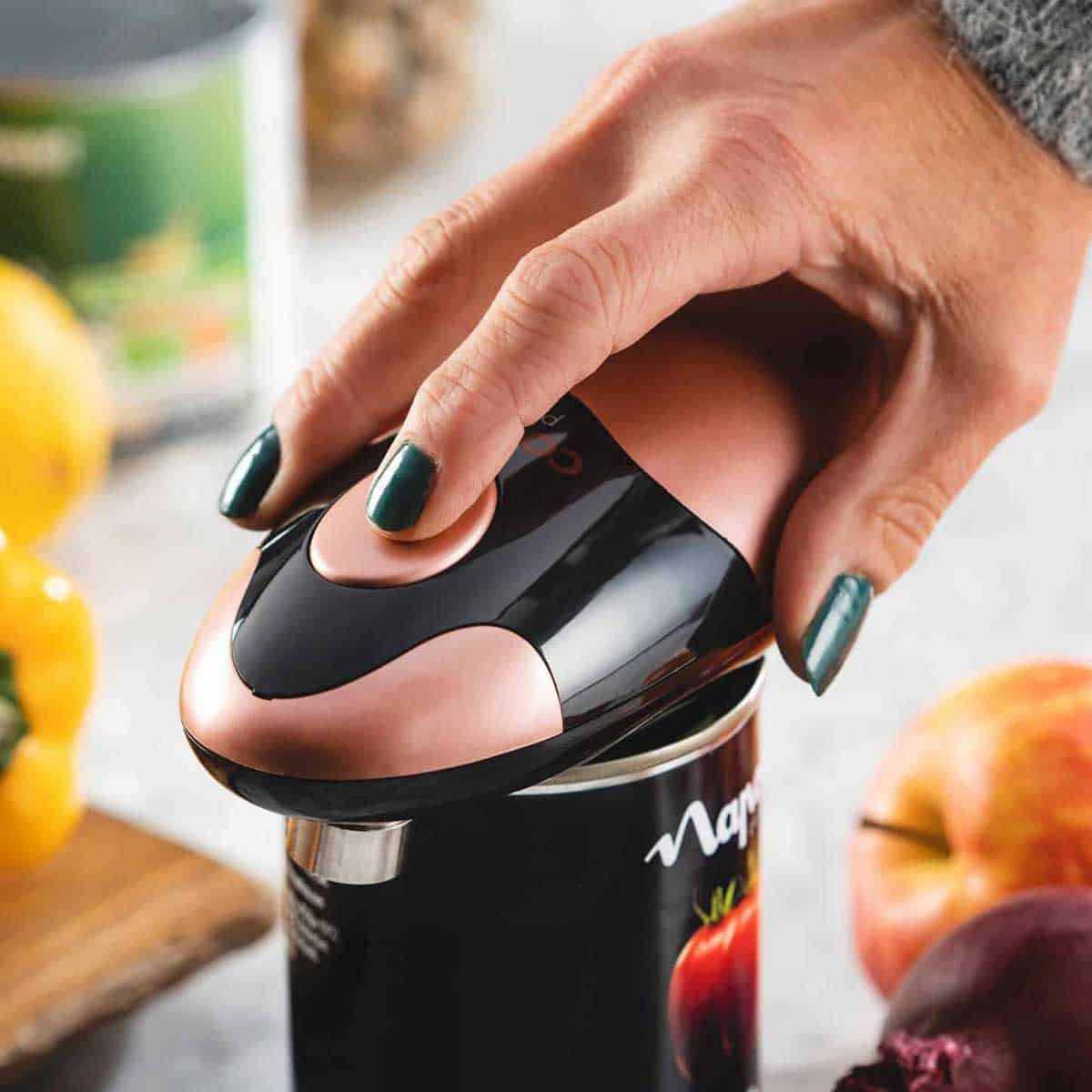
- Handheld battery-operated can openers: These compact devices attach directly to the top of the can and, with the press of a button, automatically circle and cut the lid. They offer greater portability than stand-up models but require batteries.
Electric can openers excel in ease of use and safety, often producing smooth edges. However, they are generally more expensive, take up more counter space (for stand-up models), and rely on electricity or batteries.
Safety Can Openers: Smooth Edges, Safer Kitchens
The advent of the safety can opener has revolutionized how we interact with canned goods. Unlike traditional top-cut openers, these advanced designs employ a side-cutting mechanism, removing the lid by slicing along the can’s outer seam. This ingenious method ensures that neither the lid nor the can itself is left with sharp, dangerous edges, drastically reducing the risk of accidental cuts.
Many consumers specifically seek out safety can openers, viewing them as the top can opener choice for a safer kitchen environment. Models like the Kuhn Rikon Auto Safety Lid Lifter and the Good Cook Safe Cut are prime examples, praised for their ability to create smooth, re-attachable lids that also prevent food contact with the cutting blade, enhancing hygiene.
Specialty & Commercial Can Openers: Beyond the Basics
Beyond the common manual and electric varieties, a few specialized can openers cater to unique needs:
- Heavy-duty/Commercial Can Openers: For bustling commercial kitchens or home cooks who deal with dozens of cans daily (especially large #10 cans), heavy-duty models are indispensable. Constructed from robust materials like cast iron or steel, these are built for speed, durability, and high-volume performance. They can be manual or table-mounted, designed to open 50 or more cans per day.
- P-38 and P-51: These iconic military can openers are compact, simple, and virtually indestructible. While not for everyday gourmet use, they highlight the ingenuity in can-opening history.
- Church Key: Primarily for prying open bottle caps, some can openers include a church key component for added versatility.
What Makes a Can Opener Truly “Top”? Your Buying Guide
Choosing the top can opener involves more than just picking a type; it requires a closer look at features that enhance usability, safety, and longevity.
Ergonomics and Comfort: A Grip You’ll Love
A can opener should feel comfortable in your hands. Look for models with large, soft, ergonomic handles, often featuring non-slip silicone grips. These design elements are particularly crucial for individuals with arthritis or limited hand strength, as they provide better leverage and reduce strain during use. As culinary expert David Joachim aptly puts it, “comfort is king when it comes to can openers.” Oversized, easy-to-turn knobs also contribute to a smoother, less strenuous opening experience.
Safety Features: Protecting Your Hands
Safety is non-negotiable in the kitchen. The best can openers incorporate features that minimize injury risk:
- Smooth-edge cutting: As discussed, side-cutting mechanisms are superior for eliminating sharp edges on both the lid and the can.
- Magnetic lid lifters: Many modern can openers include a small magnet that attaches to the lid once cut, allowing you to lift and dispose of it without ever touching potentially sharp metal.
- Secure clamping: A can opener that securely grips the can prevents slipping, which can lead to accidents. Locking mechanisms on manual openers are a significant plus.
Durability and Materials: Built to Last
A top can opener is an investment that should withstand the rigors of daily kitchen life. Opt for models made from high-quality, durable materials such as stainless steel or heavy-duty plastic. A robust construction ensures longevity and consistent performance. Lindsey Chastain of The Waddle and Cluck noted her OXO Good Grips can opener has lasted over 20 years, a testament to durable design.
Ease of Cleaning and Maintenance: Keeping it Pristine
Hygiene is paramount. Some can openers can be tricky to clean, accumulating food residue. Look for models that open wide for easy access to cutting mechanisms or, even better, those with removable blade carriers. While many manual can openers are not dishwasher safe, some electric and safety models may offer this convenience. Regular cleaning is essential to prevent rust and maintain optimal performance.
Versatility and Extra Features: More Than Just Opening Cans
Some can openers go beyond their primary function, offering added convenience:
- Built-in bottle openers: A handy feature for multitasking.
- Ring-pull openers: For those stubborn pull-tab cans.
- Ambidextrous design: While many manual openers are geared towards right-handed users, some models are designed for ambidextrous use, or specific left-handed options are available. Electric openers are typically universally accessible.
- Accommodation for various can sizes: Ensuring your chosen opener can handle everything from small tuna cans to large stew cans.
Expert Tips for Using and Maintaining Your Top Can Opener
Even the best tool needs to be used correctly and cared for to perform at its peak.
How to Use Your Can Opener Safely and Efficiently
- Manual (Rotary): Position the cutting wheel on the can’s edge and clamp the handles firmly. Turn the knob clockwise, allowing the wheel to smoothly cut around the circumference. For safety models, the cutting happens on the side seam. Once complete, carefully lift the lid, using a magnet if available. Always ensure a stable grip on both the can and the opener.
- Electric (Stand-up): Place the can under the cutting mechanism, ensuring the magnet securely holds the lid. Engage the lever or button, and the machine will do the rest, typically cutting along the side for a smooth edge.
- Electric (Handheld): Align the opener’s cutting edge with the can’s lid. Press the start button, and the opener will automatically circle the can.
Common Can Opener Issues and Quick Fixes
Even the top can opener can encounter issues. Here’s how to troubleshoot:
- Stuck can: If the opener jams, try reversing the turning direction slightly, then continue forward with firm, even pressure. Ensure the cutting wheel is properly engaged.
- Dull blades: Over time, cutting wheels can dull. For manual openers, inspect the wheel; some blades are reversible or replaceable. For electric models, follow manufacturer guidelines for maintenance or replacement.
- Leaving sharp edges: If your manual opener consistently leaves sharp edges, consider upgrading to a side-cutting safety model.
Keeping Your Opener in Prime Condition
“Proper maintenance is crucial for the longevity of any kitchen tool, especially your can opener,” advises Chef Maria Rodriguez, a renowned culinary consultant. “After each use, rinse your can opener thoroughly to remove any food particles. For manual models, a quick wash with soap and water and immediate drying will prevent rust. If your electric model isn’t submersible, wipe it clean with a damp cloth.” Lubricating moving parts (if applicable and recommended by the manufacturer) can also extend its lifespan. Regularly inspect for signs of wear and tear, especially on cutting wheels and gears.
Top Can Opener Brands and Models: Our Handpicked Favorites
When seeking the top can opener, certain brands consistently rise above the rest due to their commitment to quality, innovation, and user satisfaction.
- OXO Good Grips Soft-Handled Manual Can Opener: Often hailed as the best overall manual can opener, this model is celebrated for its comfortable, non-slip handles and an oversized, easy-to-turn knob. It provides a clean, consistent cut, making it a reliable choice for everyday use. Its robust design stands up to frequent use, and many users report years of dependable service.
- Hamilton Beach Smooth Touch Can Opener (Electric): For those prioritizing convenience and safety, this electric model is a top contender. Its innovative side-cutting mechanism leaves smooth, safe edges, and its tall design accommodates various can sizes. It’s particularly beneficial for individuals with limited hand strength, offering hassle-free operation with a simple push-down lever.
- Kuhn Rikon Auto Safety Master Can Opener (Manual, Safety): If smooth edges are your ultimate goal, Kuhn Rikon offers an excellent manual safety can opener. It automatically locks onto the can and cuts from the side, ensuring no sharp edges. Its compact design and hygienic operation (the cutter doesn’t touch the food) make it a favorite among safety-conscious cooks.
- Zyliss Lock N’ Lift Can Opener (Manual): This manual opener features wide, comfortable handles and a convenient locking feature that reduces hand strain. It’s often praised for its magnetic lid lifter, which makes disposing of lids easy and hygienic.
These models represent a blend of traditional reliability, modern convenience, and enhanced safety, offering excellent choices for almost any kitchen.
Frequently Asked Questions (FAQ)
Q: How do I know if my can opener is a “safety” type?
A: A safety can opener, also known as a smooth-edge can opener, cuts along the side seam of the can rather than through the top of the lid. If your can opener leaves a smooth, dull edge on both the lid and the can, it’s a safety type.
Q: Can a left-handed person use any can opener?
A: Most traditional manual can openers are designed for right-handed use and can be awkward for left-handed individuals. However, many electric can openers are ambidextrous, and some manual models, particularly side-cutting safety openers, are designed for comfortable use by both left and right-handed users.
Q: How often should I replace my can opener?
A: The lifespan of a can opener varies greatly depending on its type, quality, and frequency of use. High-quality manual openers can last for decades with proper care, while electric models might last 5-10 years. You should consider replacing it if the blades become dull, it consistently leaves jagged edges, or it struggles to open cans.
Q: What’s the best can opener for seniors with arthritis?
A: For seniors or individuals with arthritis, electric can openers like the Hamilton Beach Smooth Touch are often the best choice due to their hands-free operation and minimal grip strength required. Some manual safety can openers with large, ergonomic handles and easy-turn knobs, such as specific OXO Good Grips models, are also highly recommended.
Q: Do electric can openers work on all can sizes?
A: Most electric can openers are designed to accommodate standard can sizes. While many can handle a variety, very large or unusually shaped cans might pose a challenge. Always check the product specifications if you frequently open non-standard can sizes.
Conclusion
From the rudimentary hacks of centuries past to today’s sophisticated electric and safety models, the journey of the can opener is a testament to human ingenuity in simplifying daily tasks. Selecting the top can opener for your kitchen isn’t merely about functionality; it’s about investing in a tool that brings convenience, enhances safety, and stands the test of time. Whether you opt for the steadfast reliability of a manual OXO Good Grips, the effortless power of a Hamilton Beach electric model, or the advanced safety of a Kuhn Rikon, a well-chosen can opener is an indispensable ally in your culinary adventures. So go ahead, explore the options, and find the perfect partner to make every can-opening experience a breeze!